Who physically plugs it in?
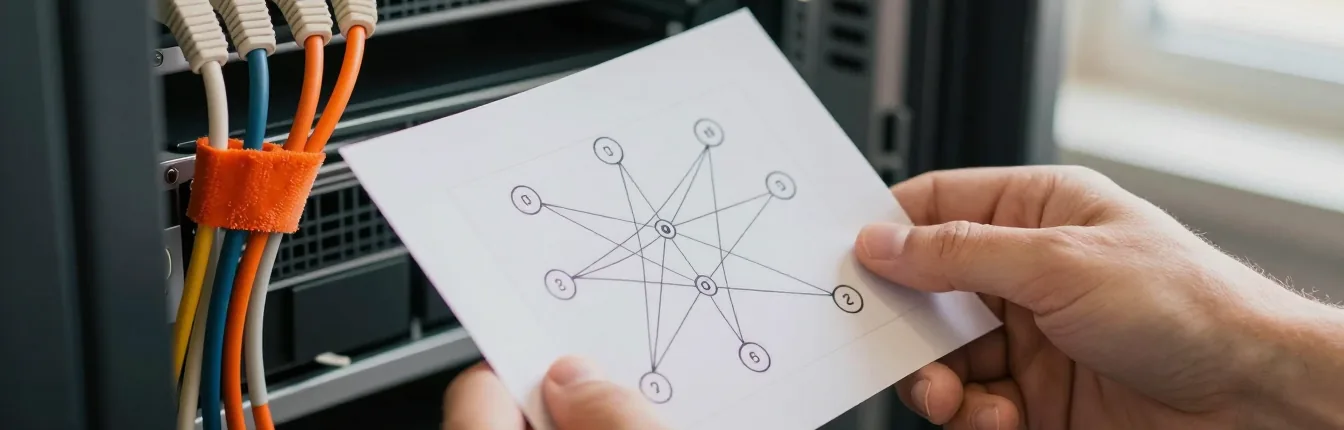
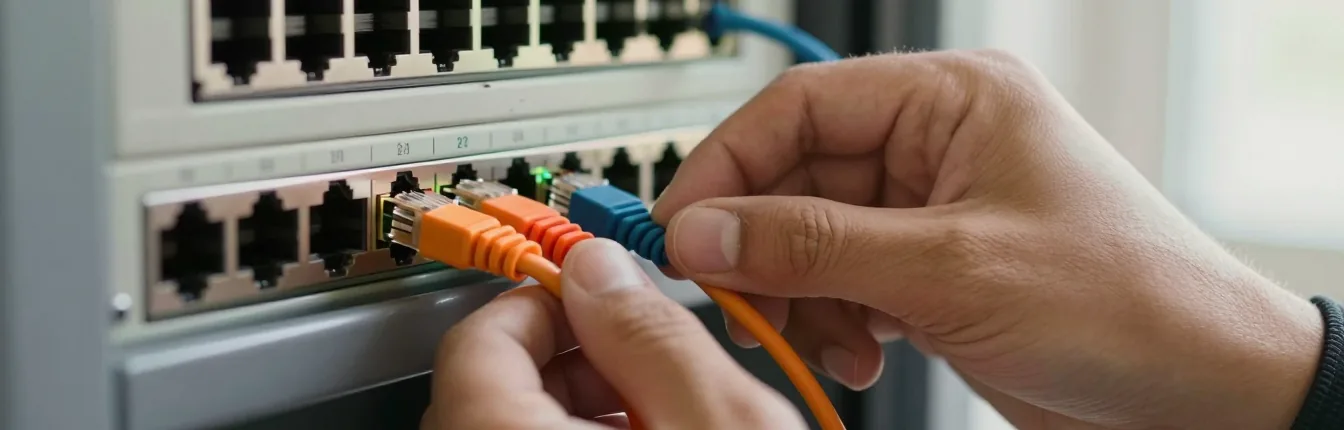
Not us, and that is said at the start rather than discovered halfway. Seating an ONT, pulling cable through a ceiling and labelling a patch panel need hands in the room, and those hands are your own staff or a local cabling contractor working from numbered instructions with a photograph per step and a call open while they do it. We do not run cable, rack equipment or install anything on site. Everything after that — gateway, VLANs, SSIDs, firewall rules, DNS — is administered from a browser by design.
What happens when it is down and you are asleep?
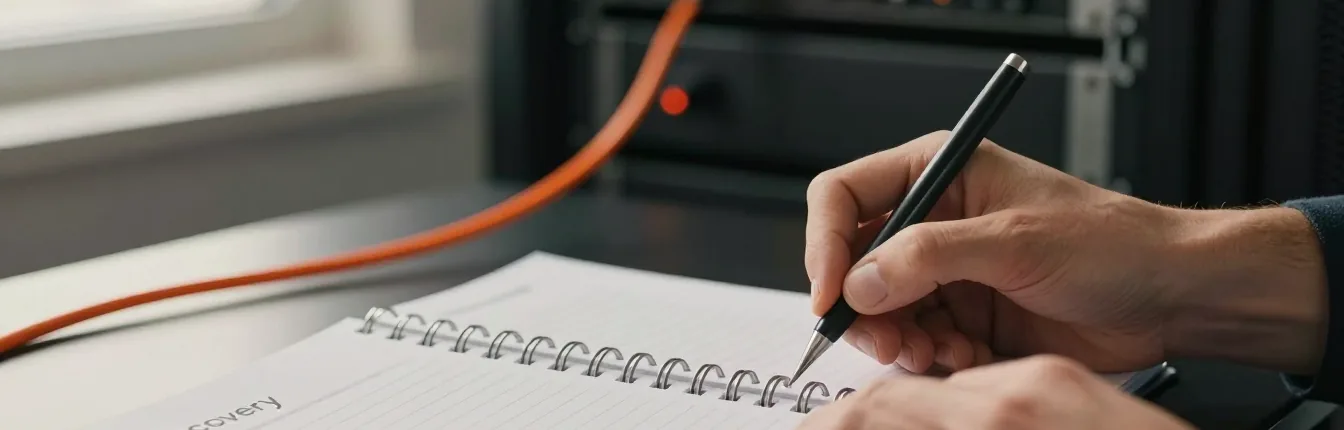
You should assume we are. There is no overnight desk, no four-hour on-site response and no spare switch in a van, and a one-person studio that implies otherwise is selling you something. What stands in their place is built earlier: labelled ports, a restore already performed on clean hardware, a recovery guide written to be followed by whoever is holding it, and a local escalation agreed by name before anybody needs it. If your building cannot tolerate that, hire a provider with a bench — that is the honest answer, not a sales objection.
You are one person. What if you are unavailable?
Then nothing should be waiting on us, which is exactly why the documentation is the larger half of the job rather than the paperwork after it. Nothing gets built that only we can log into, the admin accounts are in your name, and the recovery guide is written to be executed by somebody who has never seen the system. A supplier who cannot be replaced is a risk whatever country they are in. What you do not get is a bench: this is one person's capacity, not a department's.
How do we lock you out?
In one click. The dashboard, the domain and the DNS are in your name and on your billing, and our access is a separate named account — so revoking it is deleting one user rather than changing every password in the building. At the end of a job it is revoked by default rather than left sitting there dormant, and the admin access sheet you hold is what you check that against. A network you cannot lock your supplier out of is the real lock-in, and no contract clause fixes it. Only the account list does.
Can you survey our wifi from there?
Not properly, and anybody who says otherwise is guessing. Coverage is a physical problem — walls, lifts, a metal roof, the neighbour's access point — and it is answered by walking the building with a meter, which cannot be done from here. Segmentation, routing, firewalling, DNS and documentation are logical problems, and those are answered perfectly well remotely. If the real complaint is dead spots on the second floor, hire somebody local for the survey; we will design from their readings and say so in the findings.
Nobody here has the passwords. Where do we start?
With what is actually there, before anything is changed: an inventory of every device, port and SSID, a named owner for every admin account that can be found, and a findings list ranked by what bites first. Ownership of the domain usually bites first, because the mail and the website both hang off it. Some of it comes back the slow way, through registrar and provider recovery processes that need you rather than us. That recovery is a real cost — and it should also be the last time you ever pay it.
Can we do this as one project rather than a contract?
Yes, and it is the usual arrangement: a defined piece of work that ends with the network segmented, the restores rehearsed and the manuals in your hands. There is no retainer to sign and nothing that stops working if you never call again. It also means we are the wrong studio for the daily business of IT — a printer that will not print, a laptop that will not wake. That needs somebody who can walk to the desk, and it is worth having a local person for it whether or not we ever touch your network.